Roof catchments, paved collection areas and landscape storage show ingenuity alongside an enduring constraint: the supply is only as reliable as its source.
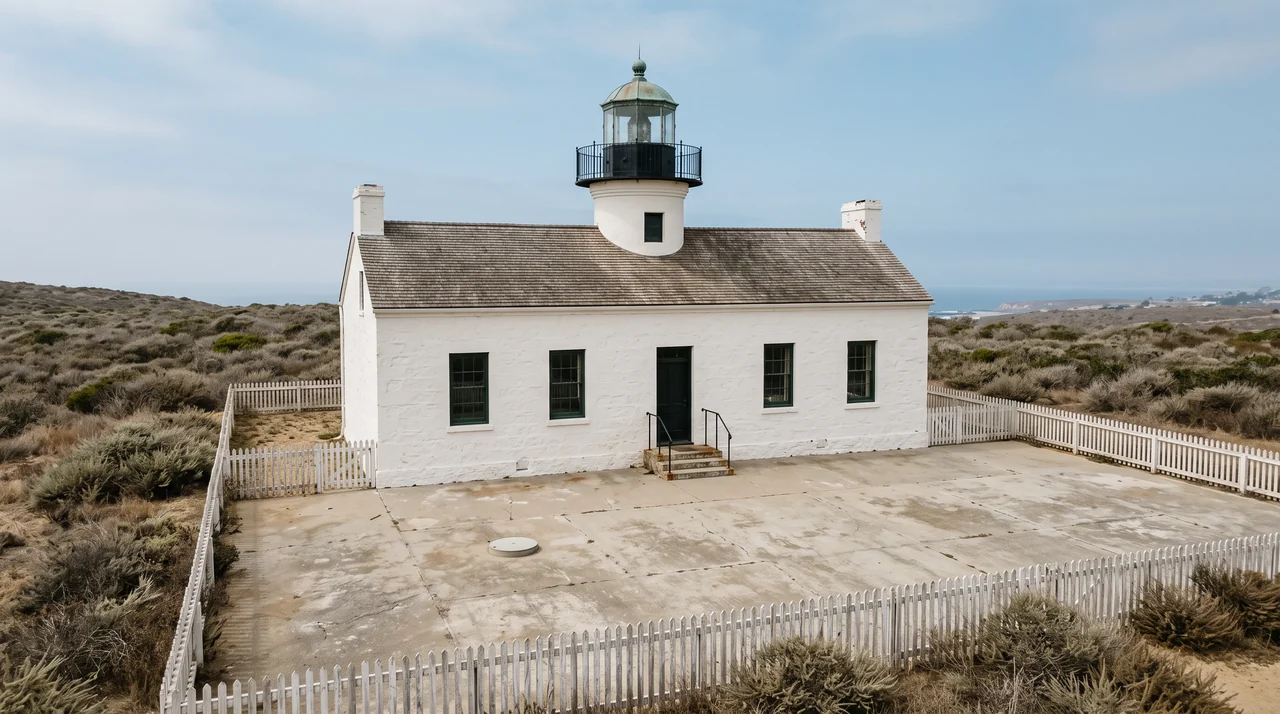
The lighthouse operated from 1855 to 1891. Gutters gathered roof rainwater; a larger concrete catchment and underground cistern followed in 1883. The National Park Service's National Register record describes an 11,000-gallon cistern.
Storage did not end scarcity. A historical NPS account records water hauled from wells when the collected supply ran short.
A design question for todayHow do catchment, storage and demand fit together through the dry season, and what is the backup?
Conceptual images interpret these water systems; they do not document actual sites or current conditions.
i
Original interpretive diagram of documented functions. Not to scale; it does not reconstruct the exact pipework or positions.
Conceptual images interpret these water systems; they do not document actual sites or current conditions.
02 / ANACAPA LIGHT STATION · CHANNEL ISLANDS
Catch the rain. Protect the source.
Paved rain catchment → covered tanks
i
Conceptual images interpret these water systems; they do not document actual sites or current conditions.
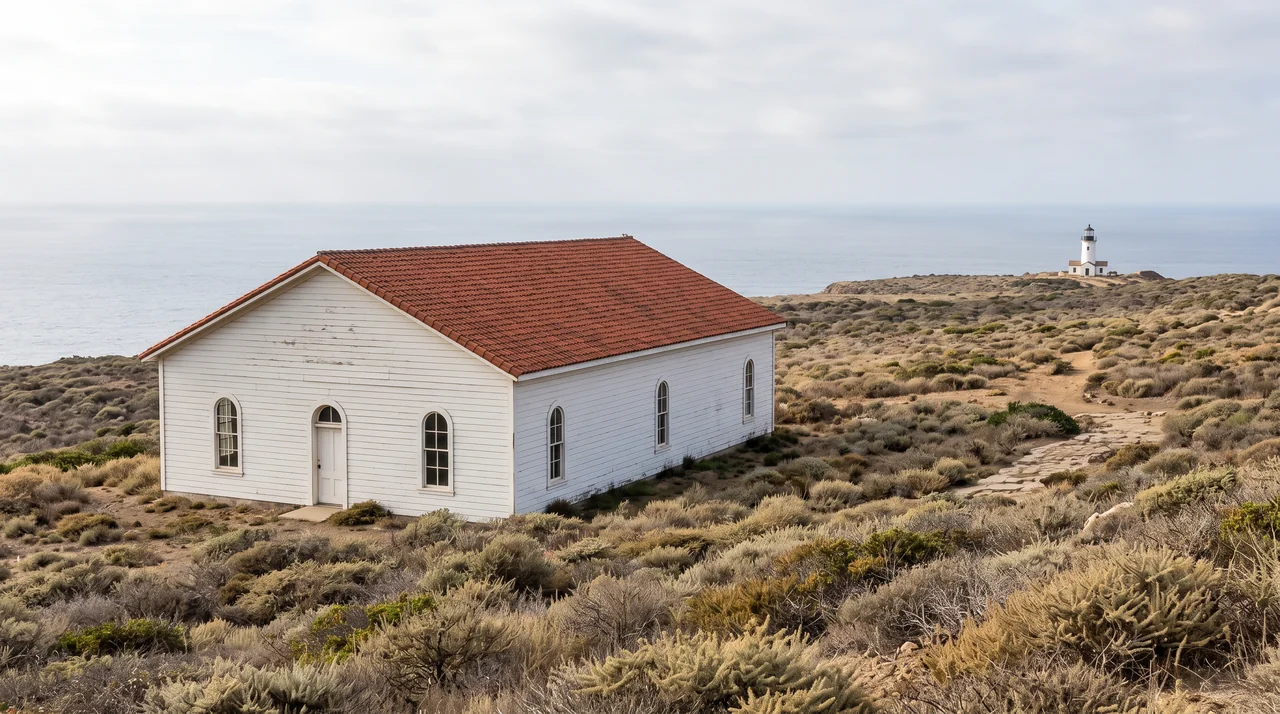
With no springs, streams or wells, Anacapa's light station used a catchment pad and two sheltered redwood tanks, built in 1932.
NPS reports that roosting seabirds, unreliable rain and water deliveries by vessel led to the catchment's abandonment. Storage alone could not resolve source quality and reliability.
A design question for todayWhat can contaminate the catchment, and how will the system work when rain is scarce?
Conceptual images interpret these water systems; they do not document actual sites or current conditions.
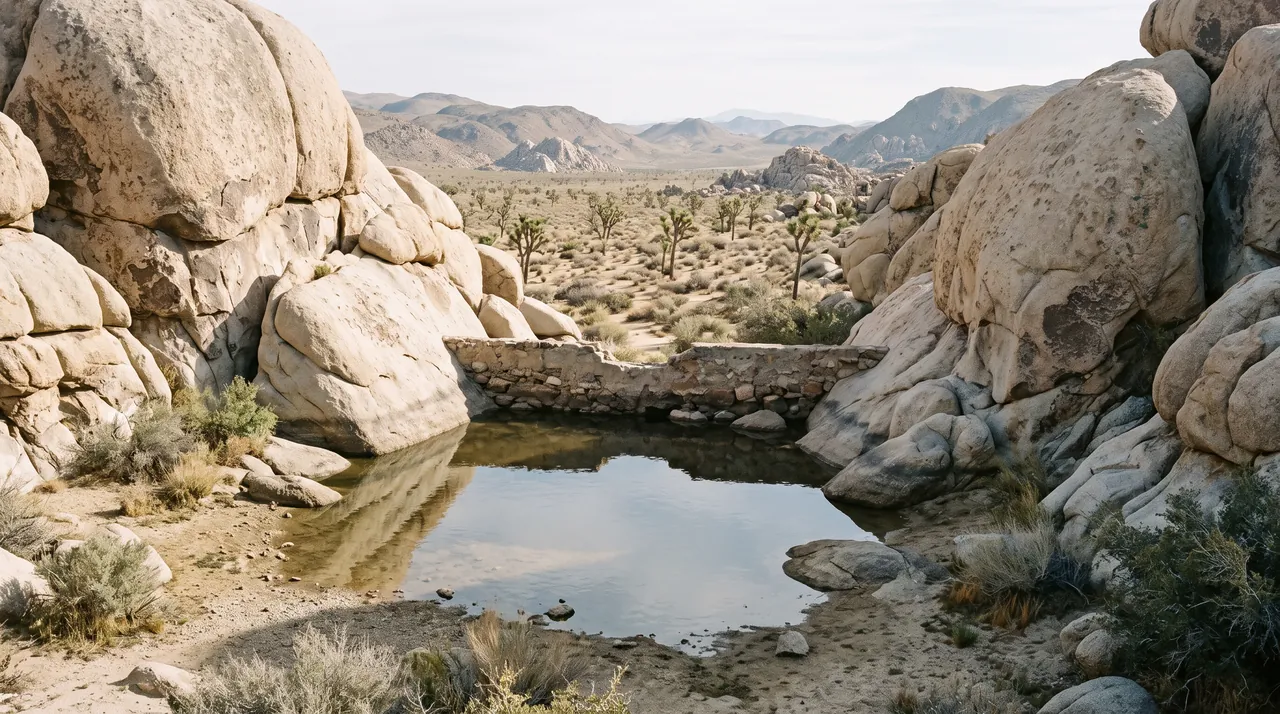
Ranchers constructed Barker Dam in the early 1900s to retain water in a natural basin among granite formations. Whether water is present still depends on rainfall.
This is a landscape-runoff impoundment, distinct from roof harvesting. Its historical role does not establish permission or suitability for damming a natural drainage today.
A design question for todayWhat does the terrain collect, where does excess water go, and what downstream responsibilities remain?
Other water histories, different kinds of collection.
Historic storage can belong to a spring-fed or creek-fed system. Keep those methods distinct from rainwater harvesting, and acknowledge the people who built them.
i
Conceptual images interpret these water systems; they do not document actual sites or current conditions.
Mission Santa Barbara: creek diversion, conveyance and storage
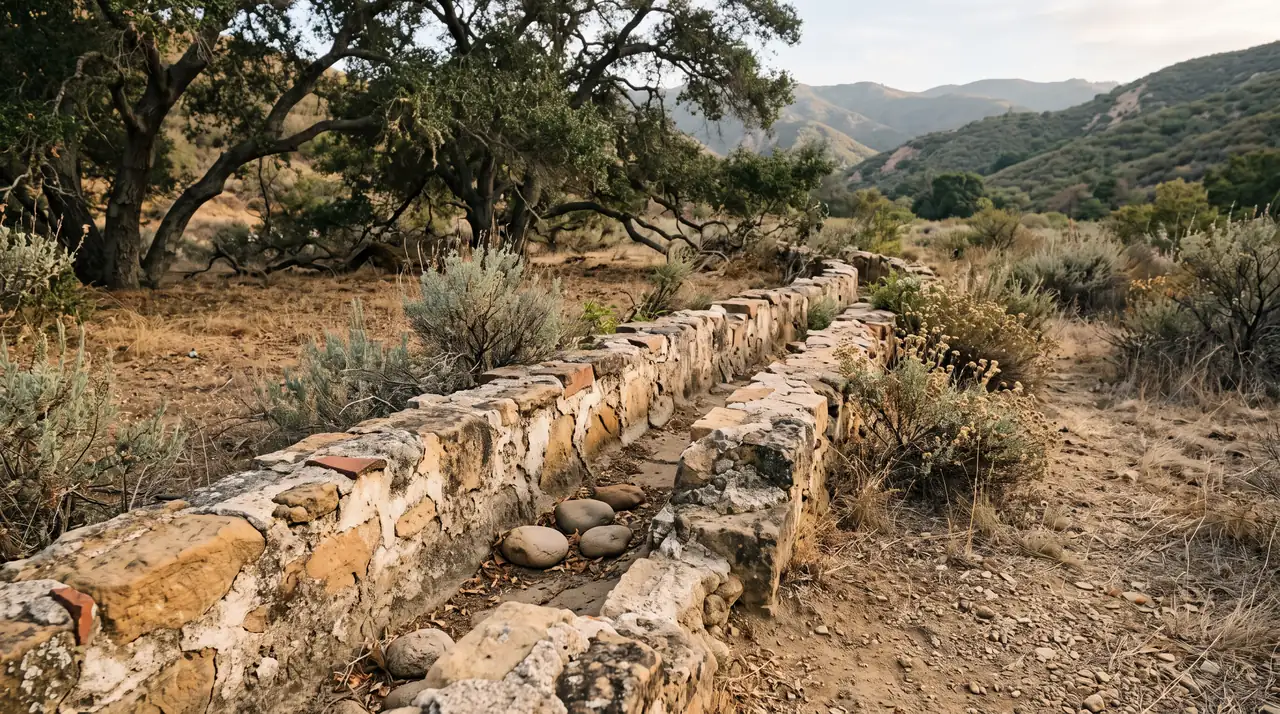
The reservoir dates to 1806; the Mission Canyon dam and aqueduct followed in 1807. Chumash workers constructed the system under Franciscan direction within the colonial mission system. The city reports that the old reservoir remained in water-storage use until 1993.
This is creek diversion and storage, rather than roof-rainwater collection. Its physical ingenuity and the unequal conditions of its construction both belong in the account.
La Purísima at ’Amuwu: springs, staged storage and successive uses
At the mission's second location near Lompoc, springs in Los Berros Canyon supplied reservoirs, conduits and a filter house. Water passed through the fountain and washing facilities, then to a cistern and irrigated fields. The cistern dates to 1817.
The National Register documentation credits skilled Chumash artisans. The system's successive uses are historically instructive, but its filter house is not a modern drinking-water safety standard.
Conceptual images interpret these water systems; they do not document actual sites or current conditions.
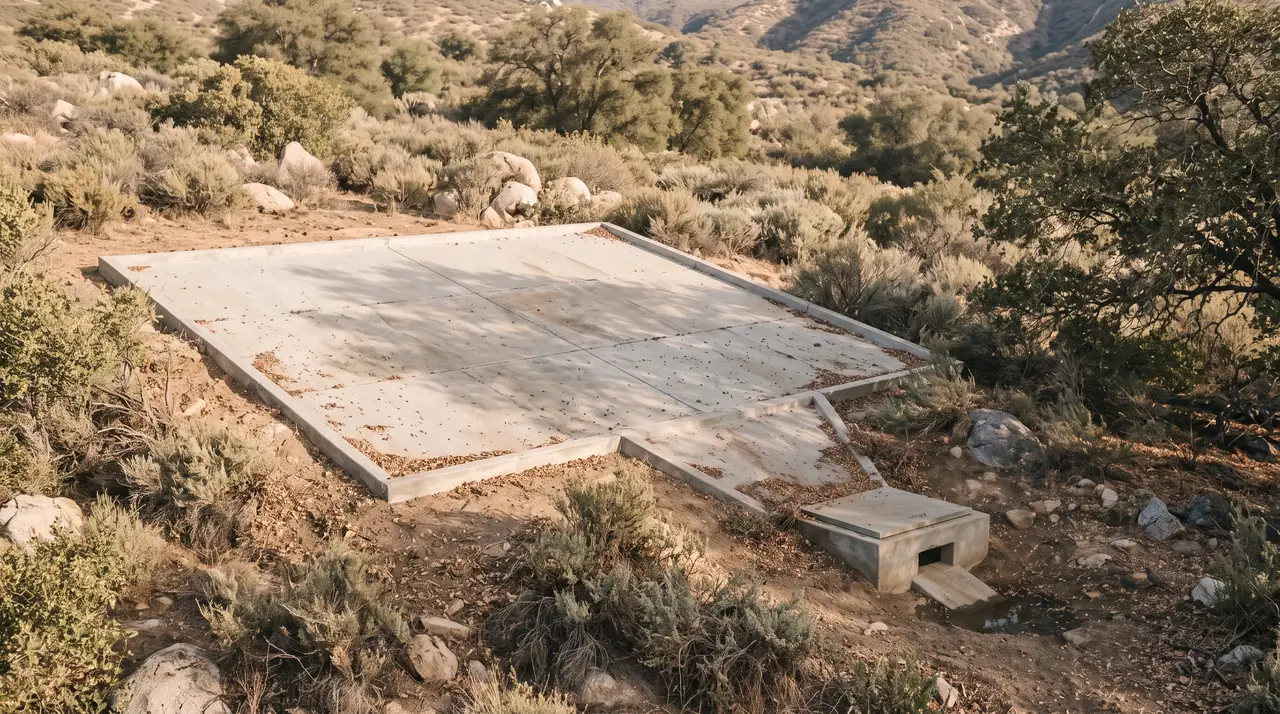
California Department of Fish and Wildlife maintenance records document two Palomar Divide Road water developments with collection aprons and storage tanks. A Forest Service oral history also recalls crews building quail guzzlers during Myron Lee’s early Palomar career.
A guzzler gathers rain from an apron into storage and makes water available to animals. Some regional examples use underground tanks. That form is a plausible explanation for concrete catchments encountered around Palomar, but a photograph or location is needed to identify a particular structure.
What the evidence does not establishThe CDFW report lists the two repairs as still in permitting at the time. It does not establish their present condition, age or suitability for human drinking.
i
Original conceptual diagram. Installation materials and layouts vary; this is not a survey or location guide for a particular Palomar guzzler.
Conceptual images interpret these water systems; they do not document actual sites or current conditions.
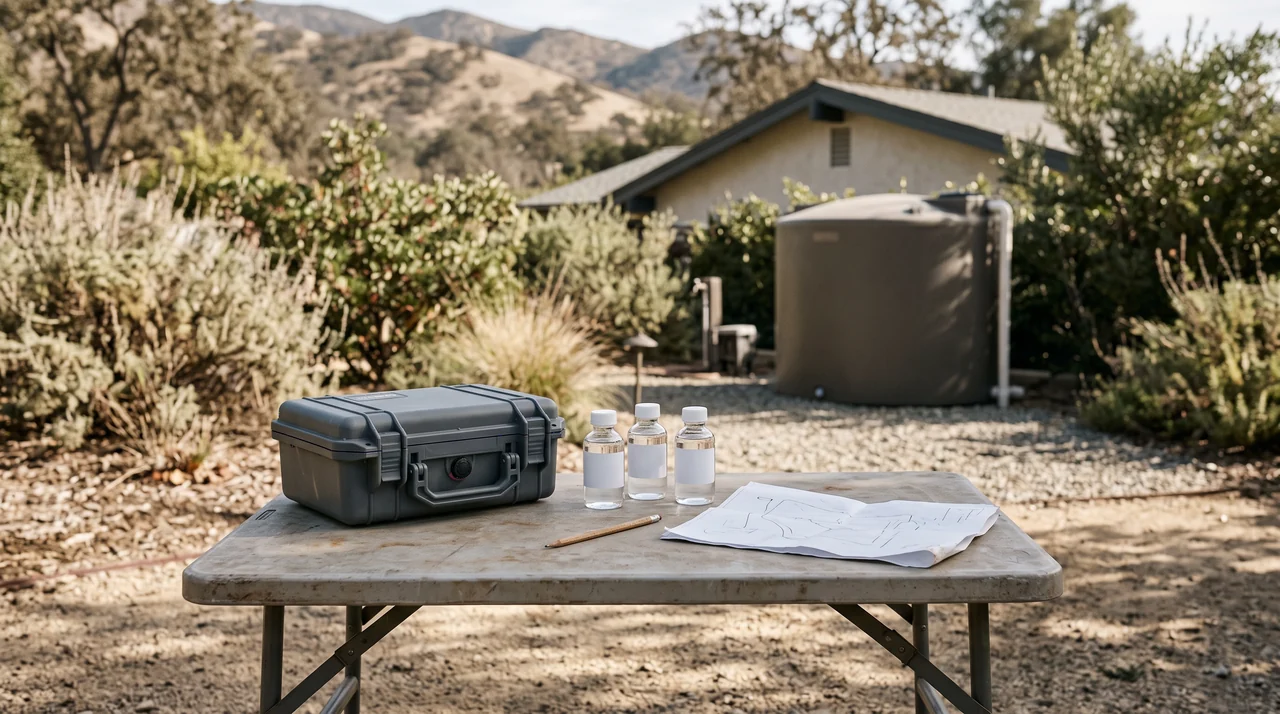
Historic household use does not show that untreated harvested water is safe to drink. Source protection, treatment, testing, cross-connection control, maintenance and local review belong in any present-day potable-feasibility assessment.
Surface-water impoundment, habitat effects and downstream rights also need project-specific evaluation. These examples are history, not construction instructions or an assurance of approval.