01 / LIFE
What already thrives?
Living soil, suitable vegetation, habitat and useful production. Identify what to conserve and where recovery needs investigation.
 Quenched Earth.Start a project
ENGINEERING WITH NATURE
Capture water where it falls, restore living soil and help build a cooler, greener, more resilient Southern California.
Explore our approach
Go deeper into water, fire, landscape and the technical work behind the plans.
01 / OUR APPROACH
Rain falling on a property connects the roof above us to the soil below, the street outside and the watershed beyond. How we handle that water shapes much more than drainage. It influences which plants can thrive, where shade can grow, how outdoor spaces feel and how a site responds when a storm arrives.
Quenched Earth brings those relationships into civil engineering. We begin with the practical needs of a property, then look at how its systems can work together. A building pad, septic layout, access road, rainwater tank and planted landscape all occupy the same ground. Considering their relationships early creates more room for useful choices.
For Stuart Kuhn, that approach connects a career in civil engineering with a wider interest in ecological restoration. It asks a question that can guide both a small property improvement and a larger landscape project: how can the work we do today help this place function better over time?
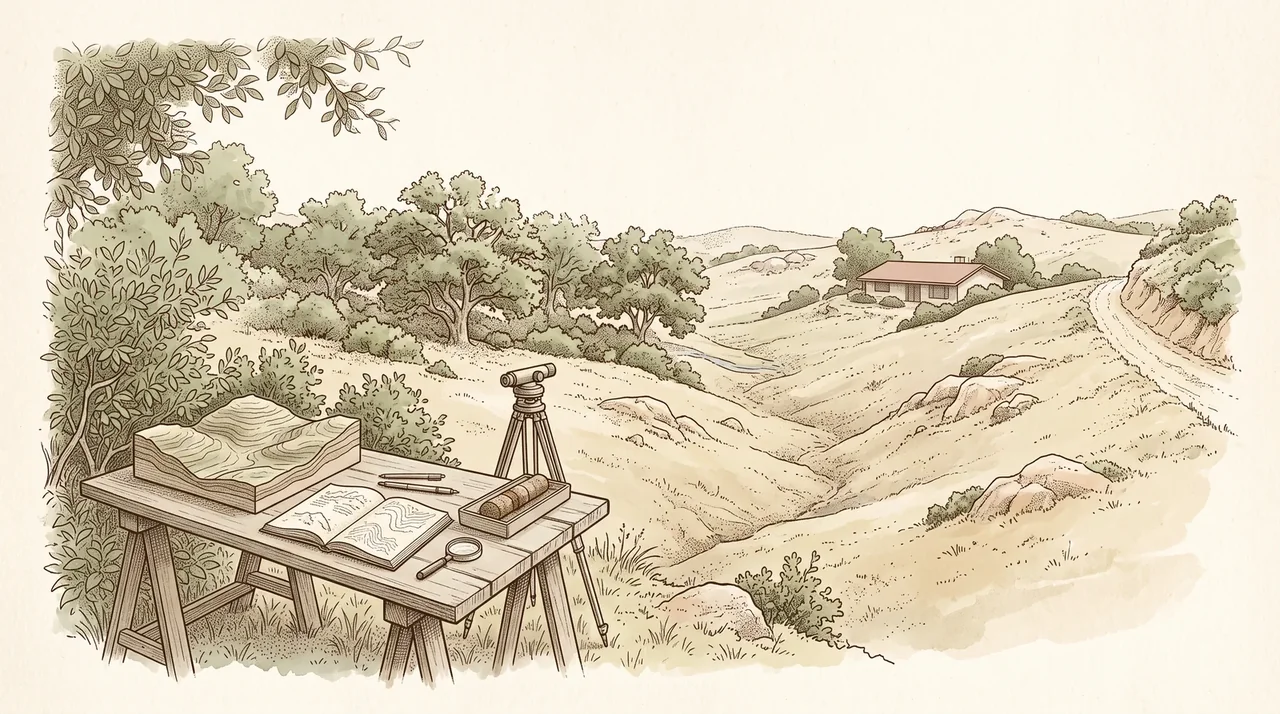
Concept study, not a project, water-supply promise or fire-safe layout.
02 / OUR APPROACH
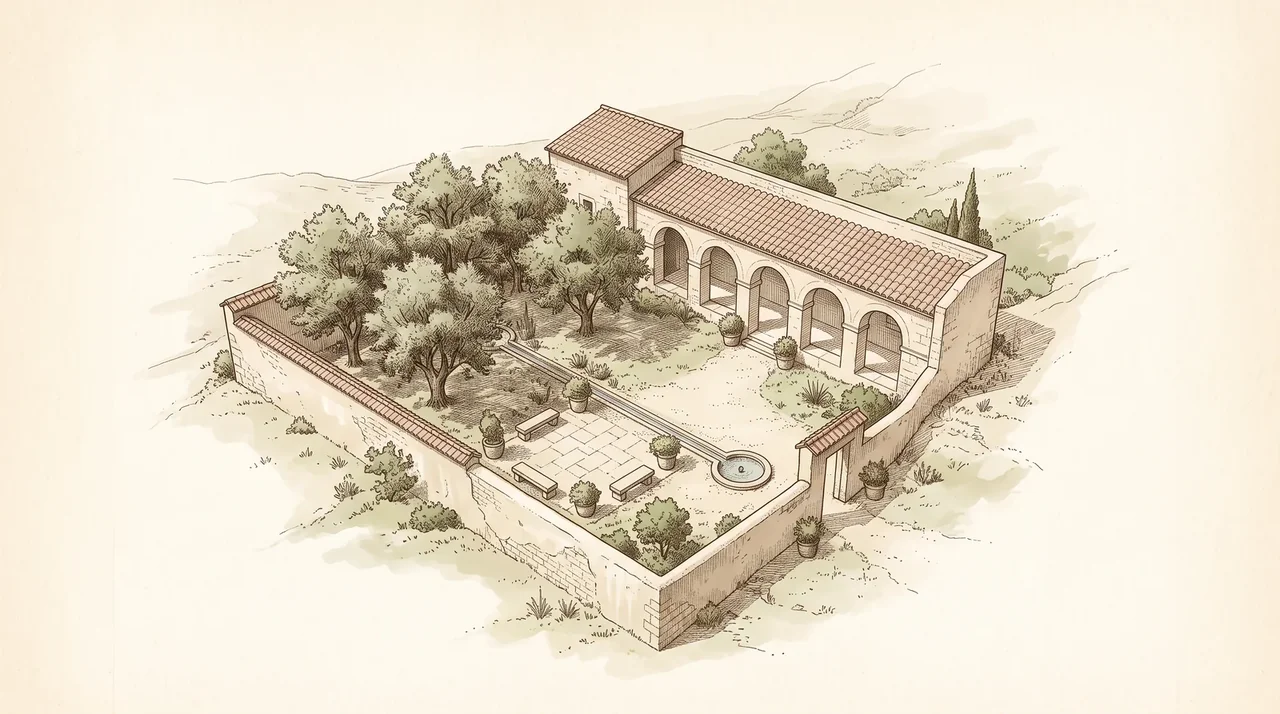
Several influences help explain that outlook. John D. Liu’s Green Gold invites a larger view of what restoration can make possible. Becoming California encourages attention to the region’s ecological history and the choices shaping its future. Comprehend and Copy Nature, the film about Viktor Schauberger, adds an invitation to observe natural processes closely before trying to direct them.
Zimbabwean farmer Zephaniah Phiri Maseko’s rain-harvesting practice, and Brad Lancaster’s work in Tucson after learning from him, bring that interest back to the ground. Their rain-harvesting practices encourage us to notice where water comes from, where it goes and how land can be shaped to give it a useful role. Planting the rain starts with observation and care.
These influences give us questions to investigate. Engineering turns those questions into decisions about grades, soils, storage, structures, plant needs and the people who will maintain a place.
03 / OUR APPROACH
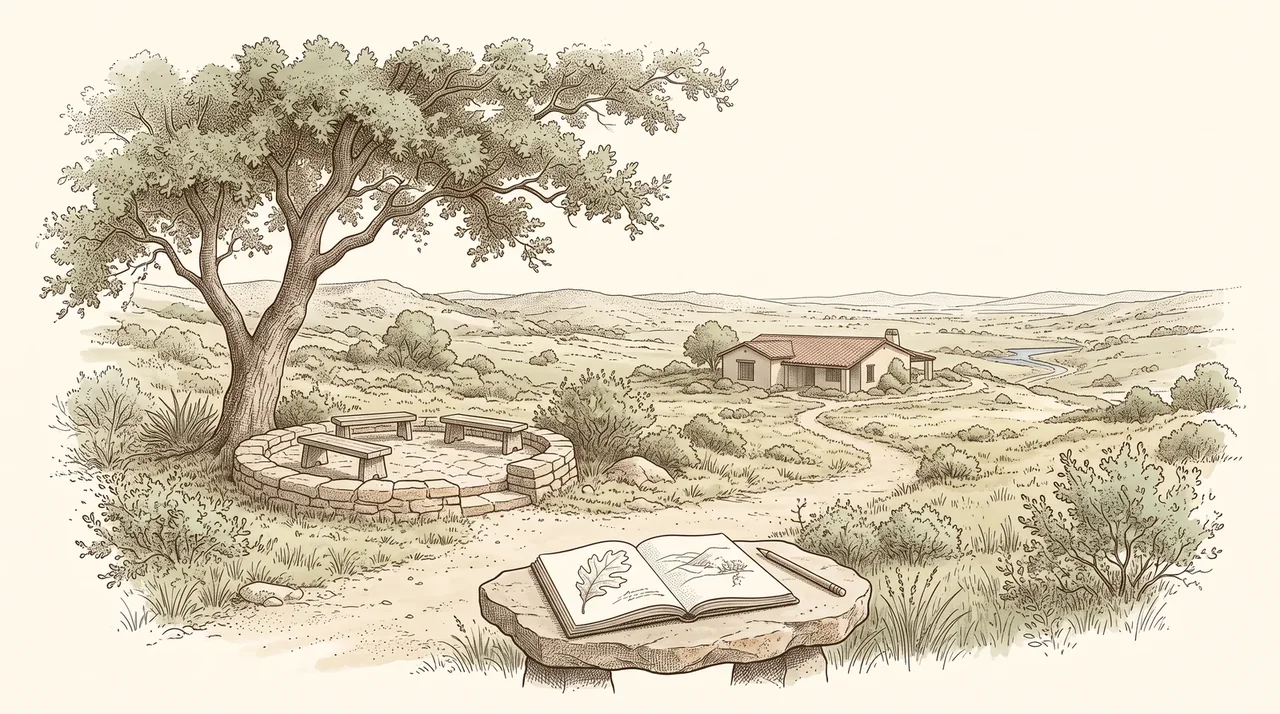
Southern California offers its own reasons to look carefully. Historical accounts describe substantial oak landscapes, while the region also contains riparian woodland, chaparral, sage scrub, grassland and wetlands. Indigenous stewardship has long shaped these places. Their diversity matters when we imagine what restoration should look like.
An oak canopy may be appropriate in one setting, native shrubland in another. A seasonally brown hillside can still be a functioning ecosystem. Our aim is to understand what belongs in a place, protect what is working and identify where damaged functions can be recovered.
Local water histories add another layer. Roof collection at Point Loma, purpose-built island catchments and the quiet infrastructure of wildlife guzzlers show different ways people have connected a water source with storage and use. Their successes and limitations remain useful questions for present-day design.
Explore Southern California’s water heritage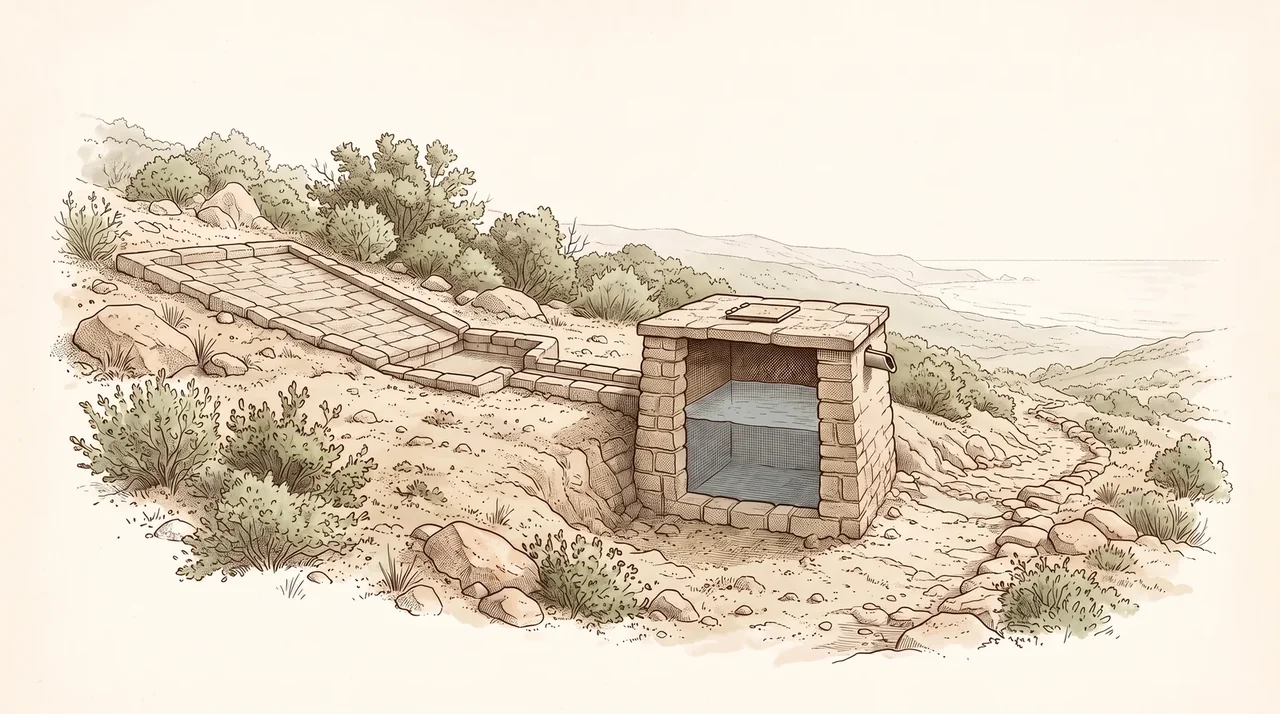
Interpretive catchment study; not a reconstruction of a particular historic site.
04 / OUR APPROACH
Stuart’s work on County Green Streets and site-design guidance, together with his experience of Temecula’s alternative-compliance approach, helped shape this outlook. It connected the possibilities of living landscapes with the practical work of drainage analysis, public infrastructure and development review.
The practical question is how to achieve a project’s purpose while making good use of the living landscape. We look first for opportunities to slow runoff, protect soil, support suitable vegetation and put captured water to work. Tree wells and vegetated swales deserve consideration early, while the layout still has room to respond.
Our aim is to use green infrastructure to the maximum extent practicable, with gray infrastructure where it is needed to protect life, safety and property. Planted systems, tanks, drains and engineered storage can work together. Their balance follows the site’s needs and required performance.

05 / OUR APPROACH
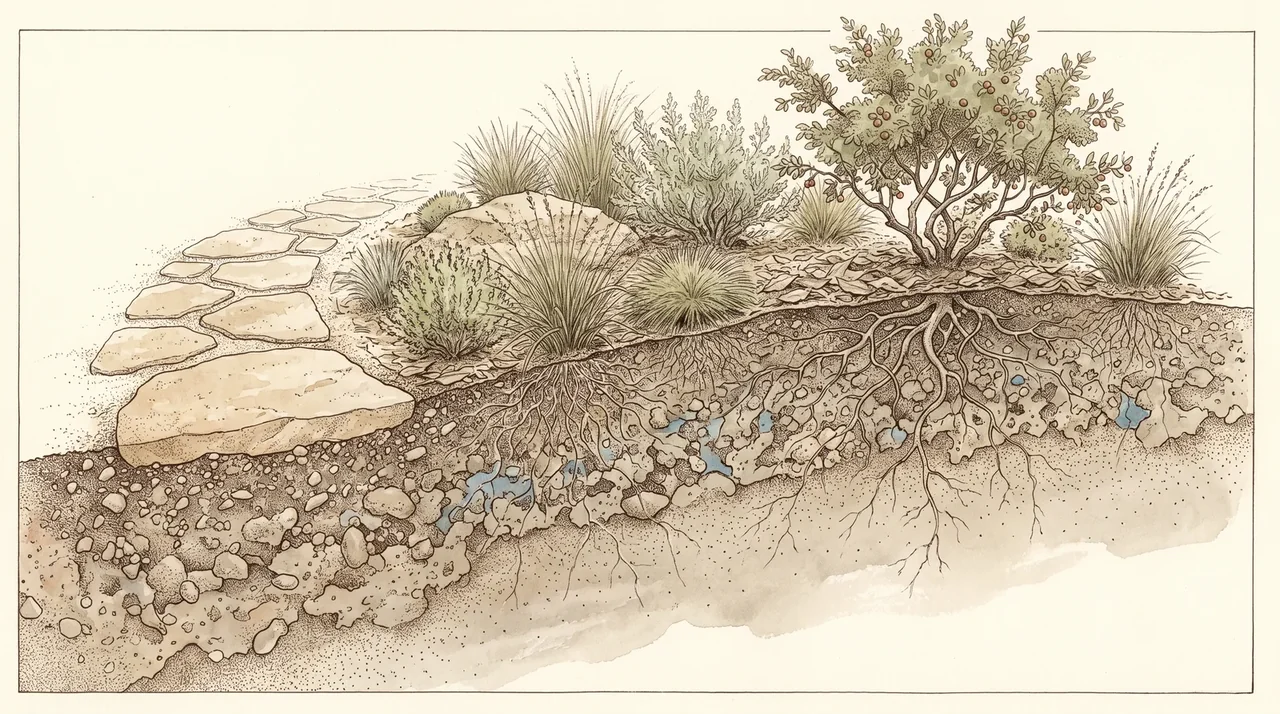
On one property, roof runoff might supply a covered tank for later landscape irrigation. On another, a carefully placed basin could give runoff time to enter suitable soil. Soil protection, appropriate mulch and well-chosen plants can help that water support roots. Each choice connects to the next.
Where permitted, a separate graywater system can give household water another use in the landscape. Onsite wastewater planning must protect public health and the disposal area. Potable rainwater is another aspiration, pursued through a locally authorized, health-protective treatment and operating plan.
That is why water planning belongs alongside grading, wastewater design, access and landscape planning. Foundations need protection. Septic areas need their required clearances and conditions. Larger flows need a safe route. Where infiltration is unsuitable, storage, filtration, reuse or controlled conveyance may offer a better fit.
Southern California’s long dry periods also make the water budget essential. We need to understand what winter rain can supply, what can be stored and what plants will need through establishment and summer. A useful plan includes the work of keeping it useful: checking outlets, caring for soil, managing vegetation and maintaining equipment.
Explore water, soil and landscape planning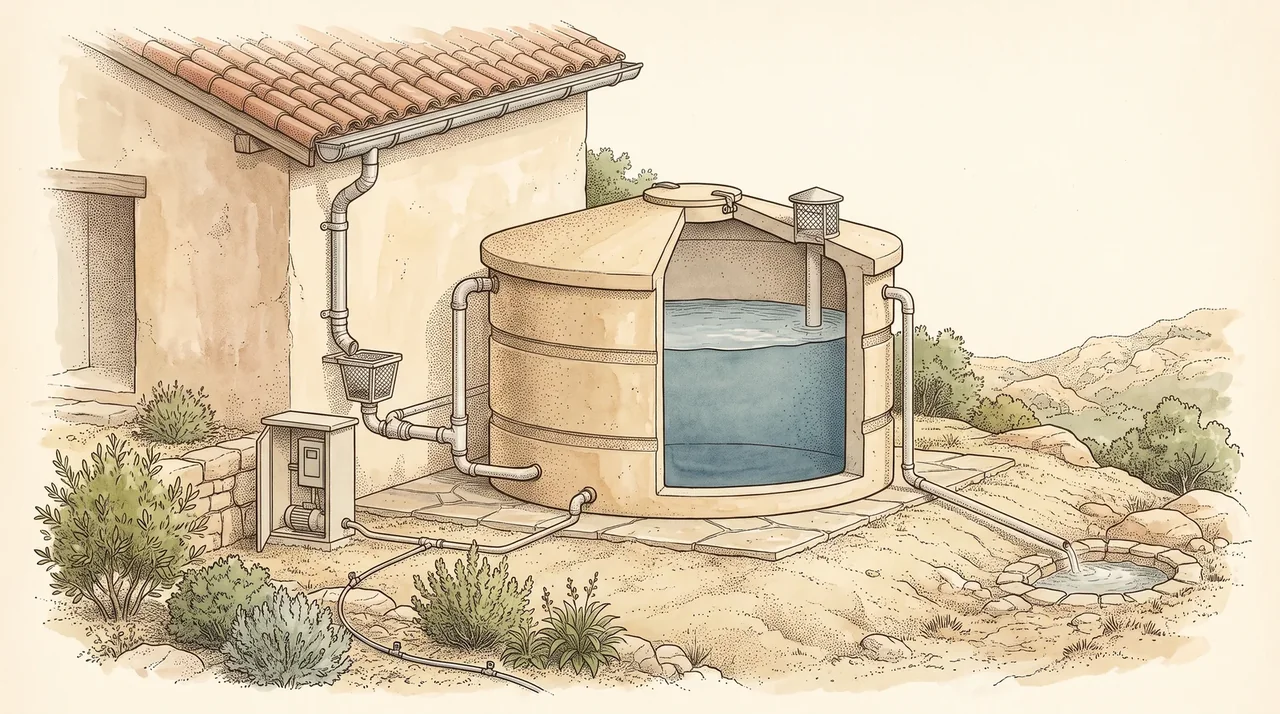
06 / OUR APPROACH
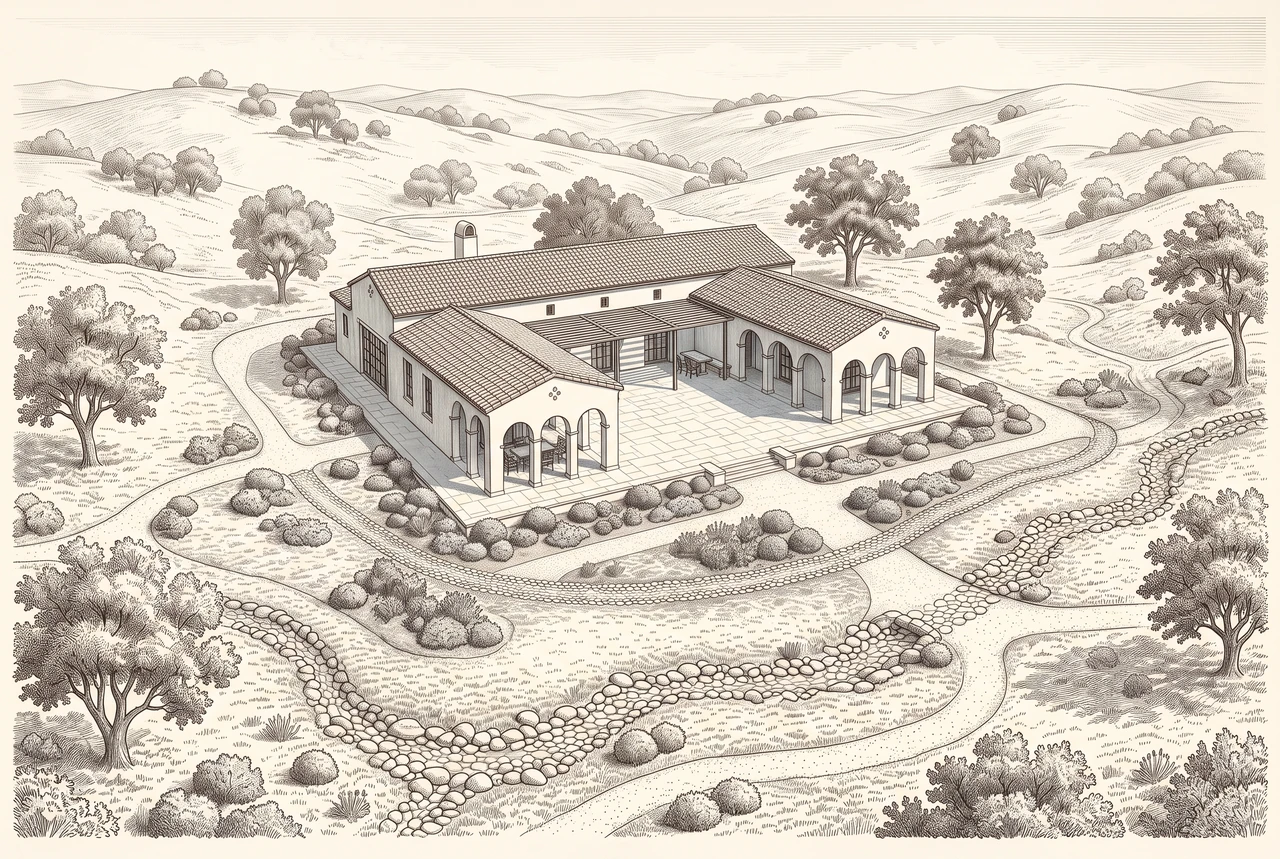
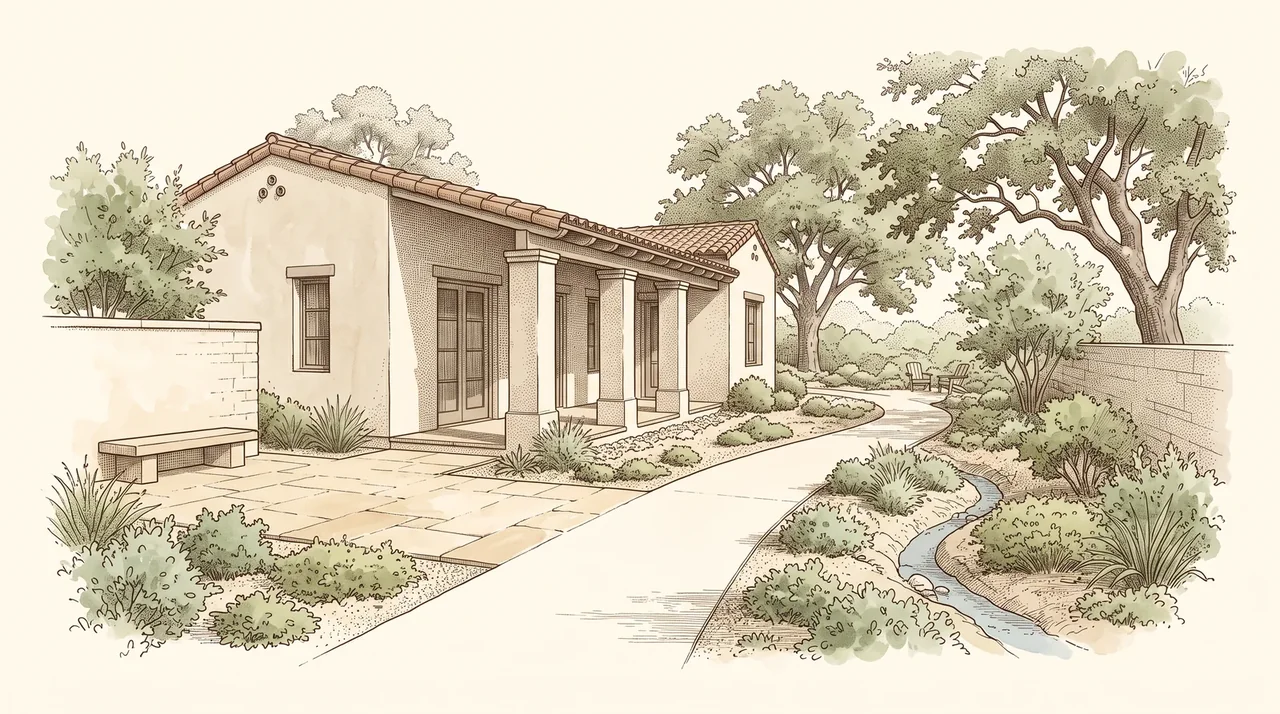
Water and vegetation also shape the experience of a place. Well-positioned trees can provide shade. Native planting can support habitat. A shaded courtyard, a healthy root zone and a maintained drainage route can each contribute to a landscape that serves daily life more thoughtfully.
Fire resilience belongs in this same conversation. Plant condition and a realistic irrigation plan matter alongside home hardening, clear immediate surroundings, appropriate fuel spacing and continuing maintenance. We approach these as connected layers of risk reduction. No landscape is fireproof.
The idea of paradise gives this work a human purpose: water, shade, refuge and a place that people want to care for. Those qualities become practical when they are considered alongside safe infrastructure, responsible water use and the effort required to sustain them.
07 / OUR APPROACH
Our longer-term ambition is to contribute to the restoration of degraded landscapes and healthier watersheds. That can include tree establishment where trees belong, recovery of native plant communities, soil repair and better relationships between developed land and the water moving through it.
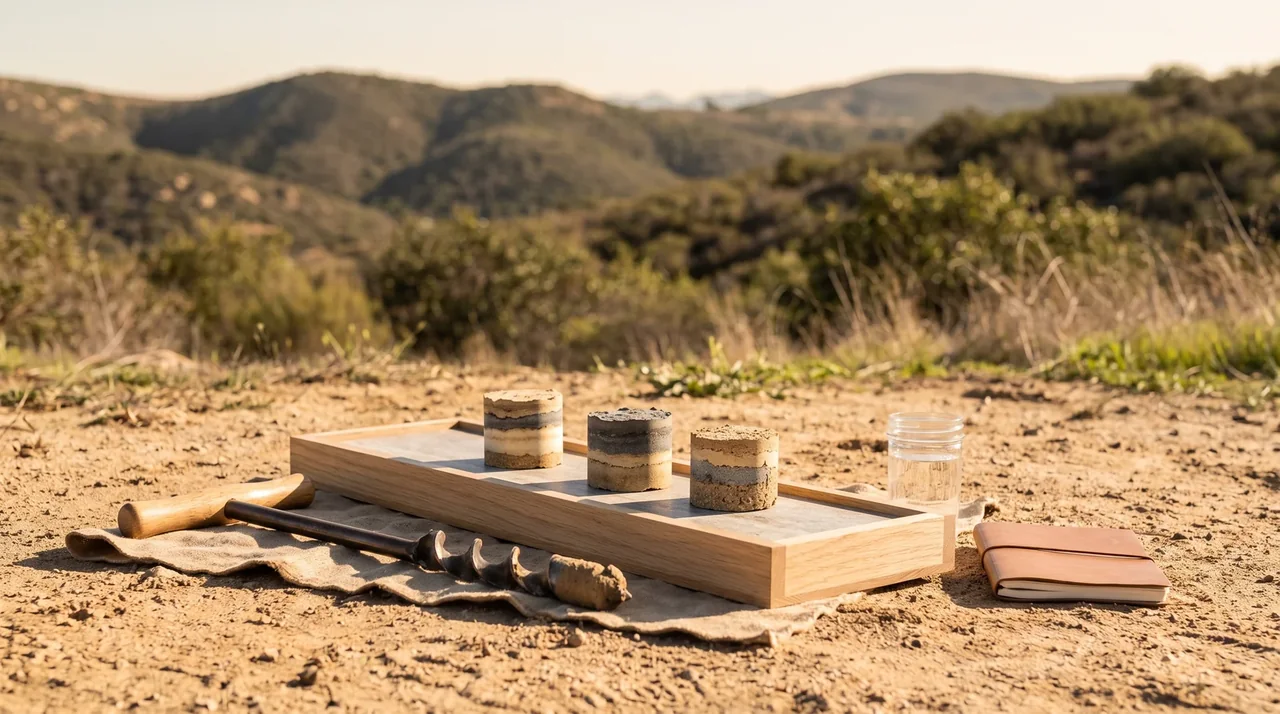
We are open to watershed restoration and post-fire recovery projects. The starting point is a site-specific assessment and a clear scope, with the appropriate specialists involved. After a fire, soil condition, slope stability and downstream risk must be assessed before infiltration measures or earthworks are proposed. Emergency stabilization and longer-term ecological recovery may need different responses.
For each project, progress begins with things we can examine: how runoff behaves, how plants establish, how much irrigation is needed, where shade develops and whether maintenance is manageable. The larger vision gives the work direction. Observation and evidence help us learn whether it is working.
Quenched Earth starts with the place in front of us. We bring civil engineering and ecological thinking to its particular conditions, then look for a plan that supports both the people using it and the living systems around them.
Discuss watershed restoration or post-fire recovery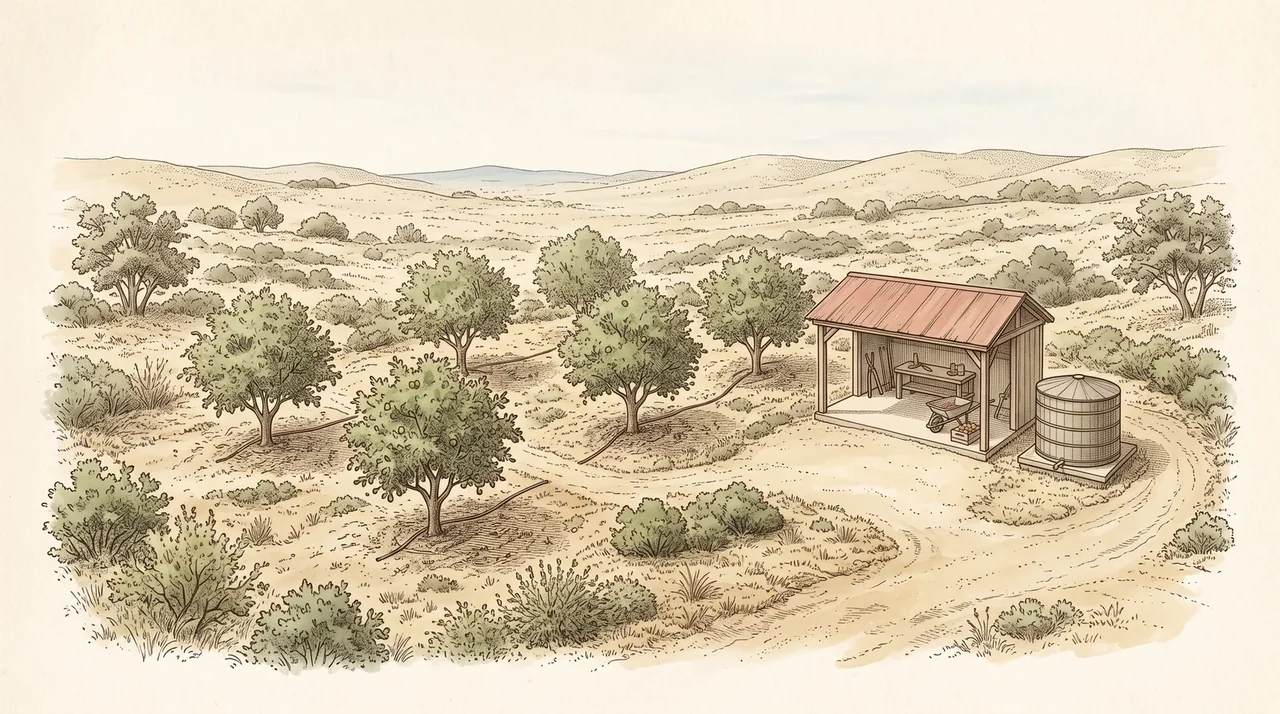
SEVEN LENSES · ONE PROPERTY
The Engineering Paradise framework helps connect the needs of a place with the people who will care for it. Use these seven lenses to set priorities before drawing lines.
Living soil, suitable vegetation, habitat and useful production. Identify what to conserve and where recovery needs investigation.
Understand supply, rain, runoff, storage, infiltration and overflow. Match water quality to the intended use.
Begin with safe sanitation and exposure control. Wastewater management and any nutrient recovery require suitable treatment, a defined scope and applicable approvals.
Consider fire, flood, wind, heat, drought, erosion and access. Look at dependencies, backup arrangements and recovery.
Shade, shelter, privacy, quiet and accessible movement. Connect the landscape to daily routines and changing needs.
Useful production and dependable infrastructure, weighed against the investment, water and recurring care they need.
Beauty, belonging, recreation and knowledge. Make room for the owner's values without losing sight of the land's limits.
FROM OBSERVATION TO A DEFINED SCOPE

Original planning diagram. A framework for asking questions, not a promise of services outside an agreed scope.
IDEAS AND EVIDENCE
These films, practitioners and records help explain the outlook. Project decisions depend on the site, current requirements and appropriate professional analysis.
Infiltration can replenish soil moisture without necessarily reaching an aquifer. Trees use water as well as providing shade. Local landscape work should be evaluated through local outcomes; it is not a promise of restored regional rainfall.
Green infrastructure performance depends on the storm, runoff rate and volume, soils, safe overflow and maintenance. Reducing a peak alone does not establish detention or hydromodification compliance.
START WITH THE PLACE IN FRONT OF US
Share your property, goals and the questions you want to resolve.