REDUCE RUNOFF VOLUME
Infiltration, plant use and reuse
Where suitable, these processes can reduce the amount of runoff leaving the site. Confirm soils, water demand and site constraints.
 Quenched Earth.Start a project
WATER & LANDSCAPE · RUNOFF REDUCTION
Can managing runoff upstream safely reduce the need for larger downstream pipes and channels?
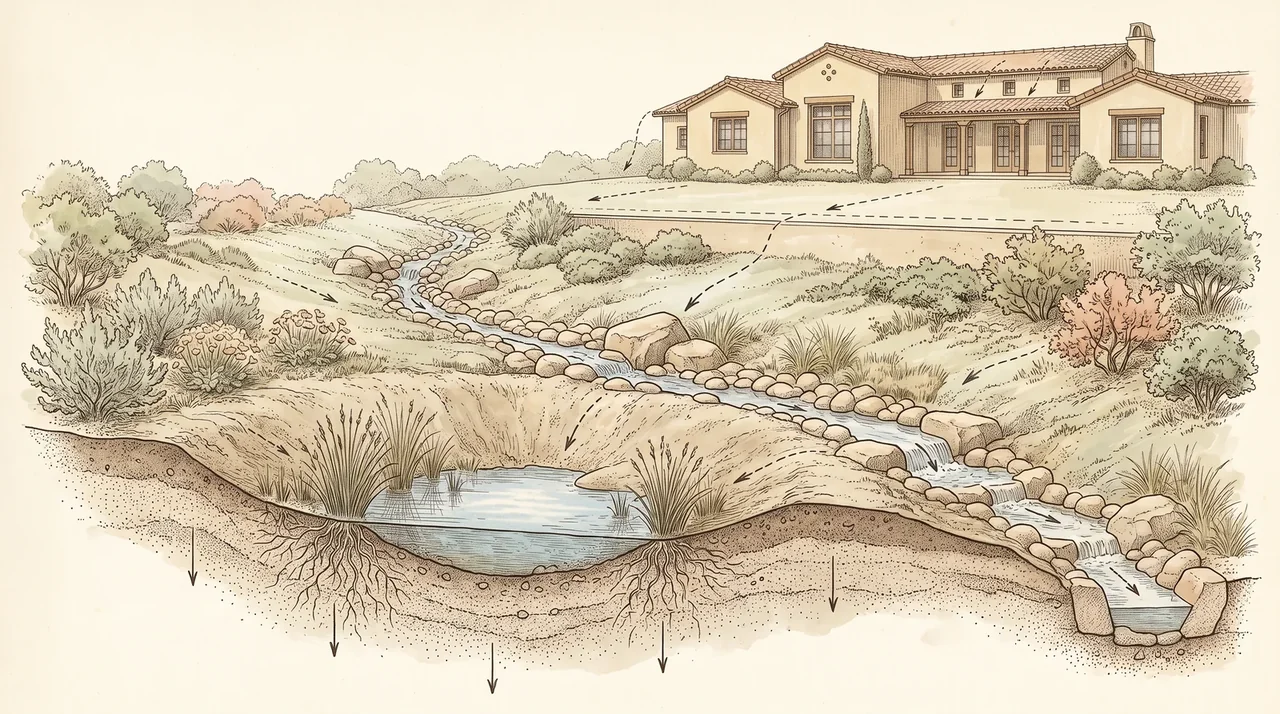
When a pipe or channel cannot safely carry the water reaching it, making it bigger is one possible response. Another is to look upstream: can we keep more rainfall where it lands, spread the remaining flow across time, and reduce the burden on the drainage system?
At Quenched Earth Engineering, we believe that question belongs near the beginning of the design process. Runoff reduction can connect flood protection with healthier soils, useful landscapes, cleaner water, and more resilient communities. Its value depends on proving that the whole system works.
FOLLOW THE WATER
Reducing volume and changing the timing of flow are distinct jobs. A site may need both, alongside dependable conveyance and safe overflow.
Rainfall, roofs, roads, soil and upstream land contribute to the flow reaching a common outlet.
Route the combined flows. Check water levels, velocities, tailwater, release timing and safe overflow, including conditions when a measure cannot provide its normal benefit.
Conceptual process diagram. It identifies questions to analyze; it is not a site layout or a demonstrated level of performance.
01 / DESIGN QUESTIONS
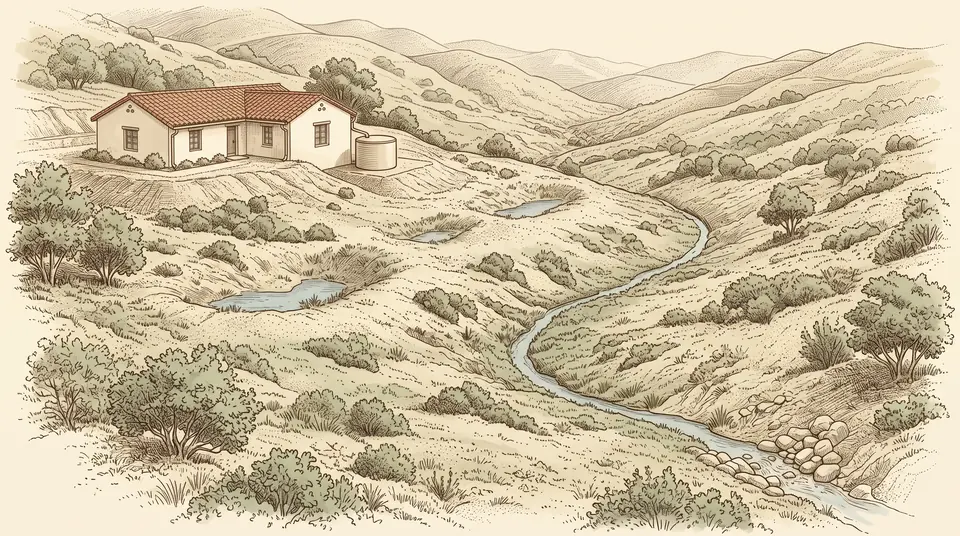
Roofs, roads, compacted soils, and connected pavement can send rainfall rapidly toward a common outlet. Distributed improvements can interrupt that path. Depending on the site, these may include soil restoration, tree wells, vegetated swales, rain gardens, rainwater storage, infiltration areas, and detention with controlled releases.
These features do different jobs. Infiltration, evapotranspiration, and water reuse can reduce the amount of runoff leaving a site. Temporary storage can reduce or delay a peak without necessarily reducing the total volume. A successful design identifies which benefits are needed and how each feature contributes.
02 / DESIGN QUESTIONS
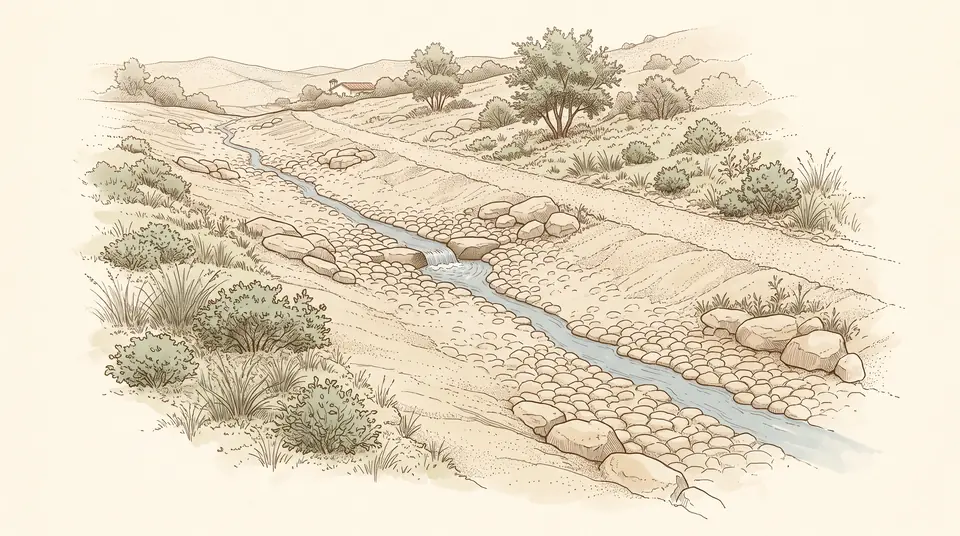
Vegetation can be an intentional part of water management. Roots support soil structure, planting intercepts rainfall, and roughness can slow shallow flow. Gentle swales and appropriately designed level or stepped storage areas can give water more time to spread, soak in, or move downstream at a controlled rate.
That benefit comes with a hydraulic tradeoff: vegetation can also reduce the carrying capacity of a channel. We account for mature growth, sediment, seasonal conditions, and maintenance so that the landscape has room to perform without creating an unsafe obstruction.
03 / DESIGN QUESTIONS
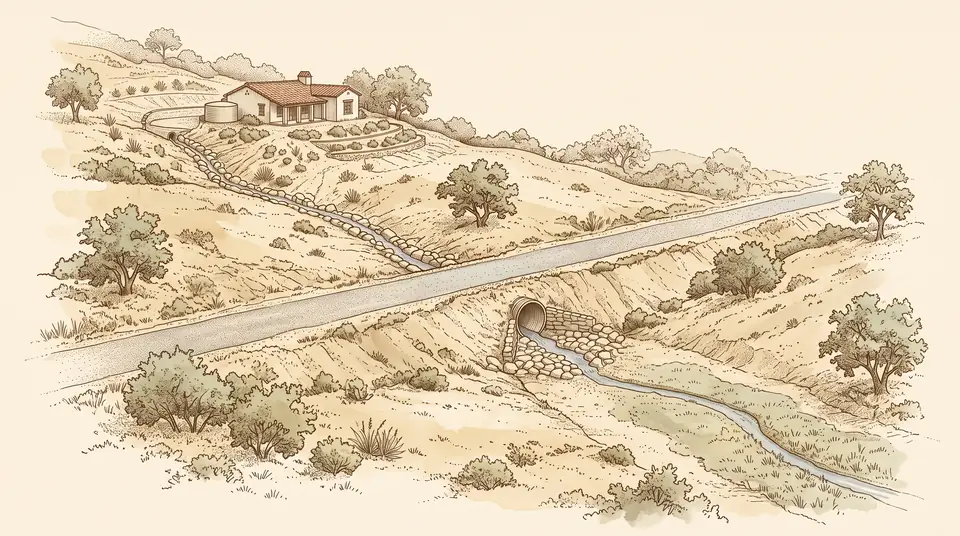
Keeping one project's discharge below a selected rate is only part of the analysis. Other properties contribute water, downstream conditions can cause backwater, and delayed releases can arrive at the same time as another tributary's peak.
Watershed-scale design considers rainfall, soils, storage, outlet controls, and flow routing together. We evaluate relevant storms and wet conditions, the timing of releases, downstream capacity, and safe overflow paths. Future development and changing rainfall conditions also deserve consideration where they affect long-term performance.
The goal is acceptable water levels, velocities, and flood risk throughout the affected system. Reducing a flow below its existing level does not automatically make an already-flooding location safe.
04 / DESIGN QUESTIONS
Infiltration is not appropriate everywhere. Shallow groundwater, poor soils, contamination, steep slopes, nearby foundations, wells, and onsite wastewater systems can limit where water may safely soak into the ground.
A responsible design also considers what happens when soils are saturated, storage is full, an outlet is blocked, or rainfall exceeds the design event. Overflow routes and necessary conveyance remain essential parts of the system. Water-quality, erosion-control, and flood-protection requirements each need their own demonstration of performance.
05 / DESIGN QUESTIONS
Distributed systems need clear ownership, access, inspection, maintenance, and funding. Sediment can consume storage or clog an infiltration surface. Plants change over time. Debris and post-fire runoff can create conditions very different from an ordinary storm.
Design must connect those realities to practical maintenance and a dependable drainage network. It should also consider downstream channel stability, habitat, and the effects of changing the amount and timing of water reaching a stream.
06 / DESIGN QUESTIONS
Before committing to larger pipes or channels, we evaluate whether upstream runoff reduction can safely reduce the required work. Sometimes it can. Sometimes conveyance upgrades, additional storage, or a combined approach remain necessary.
Our approach favors green infrastructure to the maximum extent practicable, supported by the engineered systems needed to protect life, safety, and property. The choice should rest on site-specific analysis, lifecycle costs, maintenance responsibilities, residual flood risk, and approval by the responsible agencies.
GUIDANCE AND EVIDENCE
Flood control, water quality and hydromodification have distinct performance requirements. Applicable standards and the reviewing agency shape each project.
The County’s 2014 Hydraulic Design Manual recognizes detention as a possible response to inadequate downstream conveyance, subject to agency requirements and downstream evaluation. It also warns that delayed local releases can coincide with another watershed peak. The emphasis here is to evaluate distributed landscape improvements early and verify their combined performance.
This page describes a general watershed-design strategy. The formal Runoff Reduction Method developed by the Center for Watershed Protection and Chesapeake Stormwater Network, and Virginia’s subsequent implementation, provide water-quality volume and pollutant-load accounting methods. They do not establish California flood-control compliance or demonstrate that a particular drainage network is safe.
The County’s 2026 Hydrology Manual distinguishes a Rational Method peak-flow calculation from the hydrographs needed for volume-dependent and detention designs. A lower calculated peak or a water-quality credit does not by itself establish storage, flow-duration or downstream hydraulic performance.
Vegetation’s hydraulic roughness is useful when it is designed into the available space. Mature growth and maintenance states also affect conveyance capacity. Infiltration requires screening for site constraints, and the design must account for sediment, debris, saturated conditions and overflow.
References reviewed 9 October 2026. Confirm current requirements and project-specific applicability before design.
ENGINEERING METHODOLOGY · VERSION 0.4
Review the physical routing framework, published water-quality and HMP methods, the identified guidance gap, and the engineer-selected downstream sizing interpretation. This technical reference includes proposed engineering interpretations and is not an adopted agency rule.
Read the methodologyEXPLORE THE OPPORTUNITY
Bring the drainage concern, available plans and the outcome you want to achieve. We can discuss an appropriate assessment and engineering scope.